ROSMARIE LUKASSER
Annäherungen an „…bin im Netz i5.0
Opening: July 2, 2026
Duration: July 3 –August 29, 2026
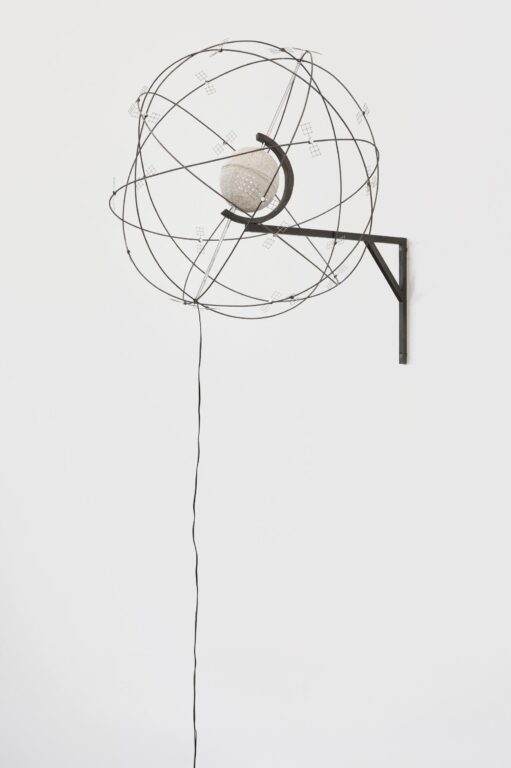
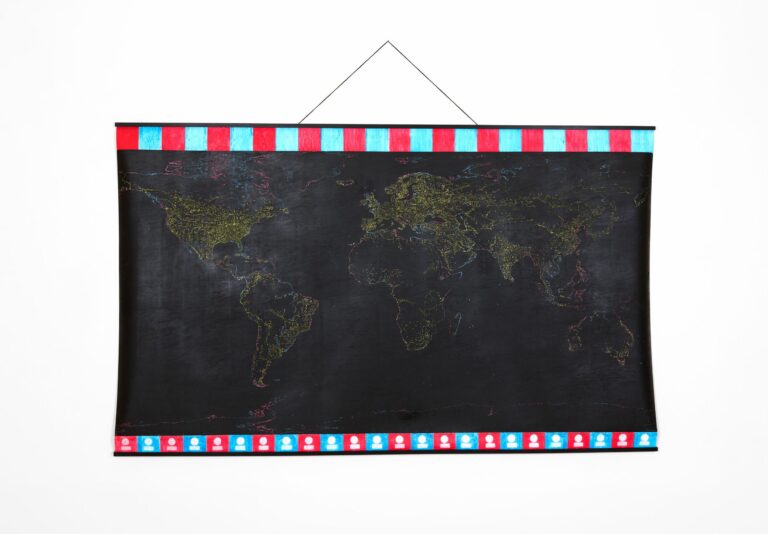
Rosmarie Lukasser’s work revolves around the question of what it means to live in an interconnected world. Her focus is not on the technologies themselves, but on the traces they leave on our bodies, our perceptions, and communication. Her work explores the often invisible structures that connect people, places and information. Based on maps, diagrams, and the structures of global networks, Lukasser translates digital systems into an analog language. Undersea cables, hubs, flight paths, and location tracking systems become images of a network that spans the globe while being deeply embedded in everyday life. What initially appears abstract, reveals itself as part of the human experience. An “Echoraum” opens the exhibition
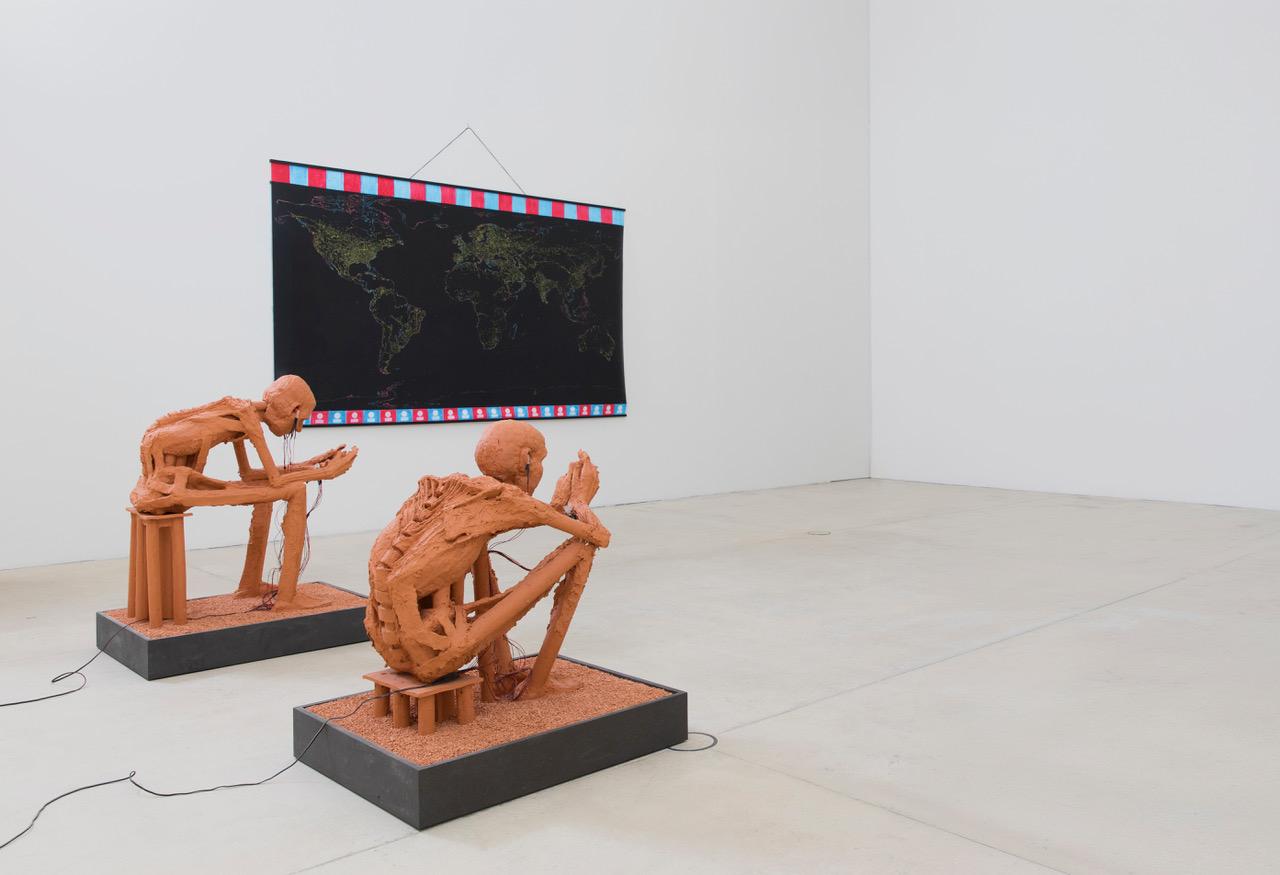
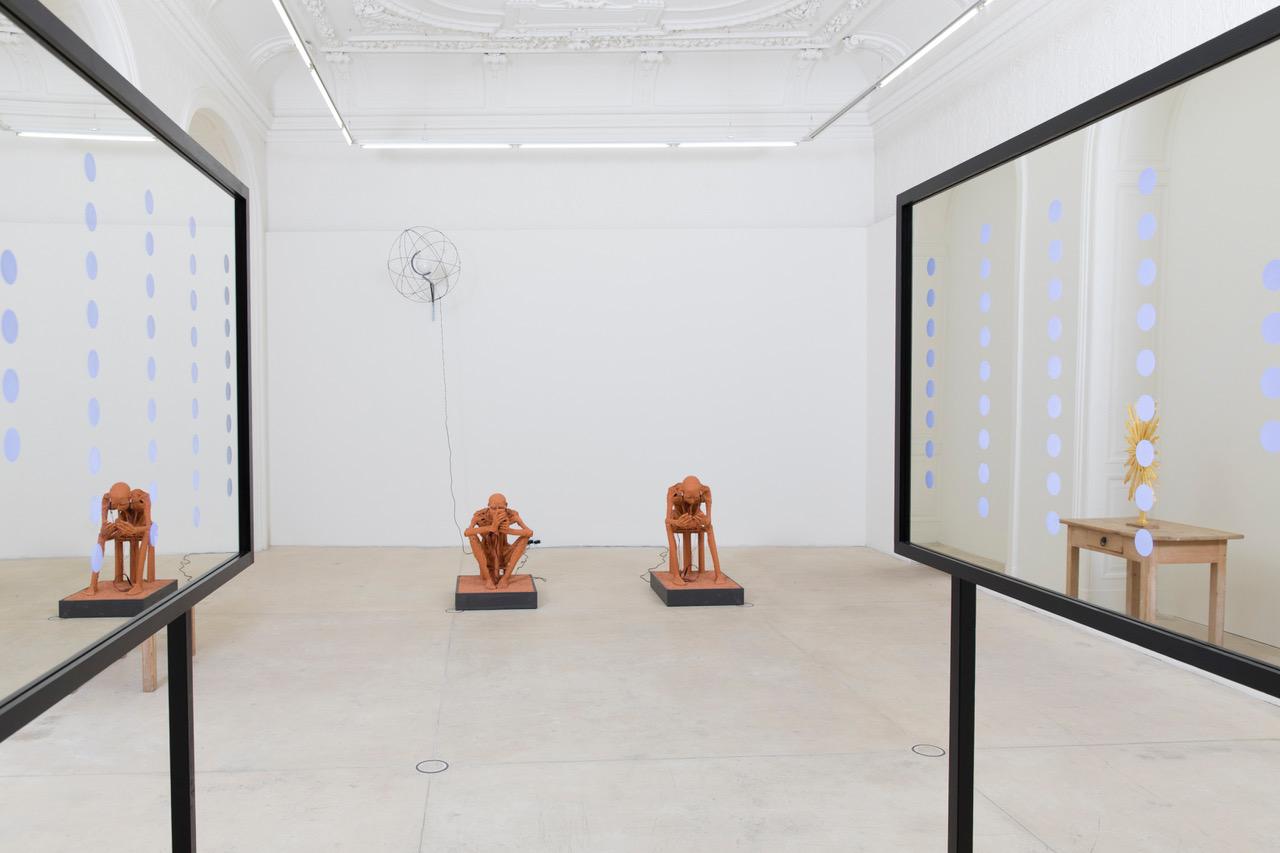
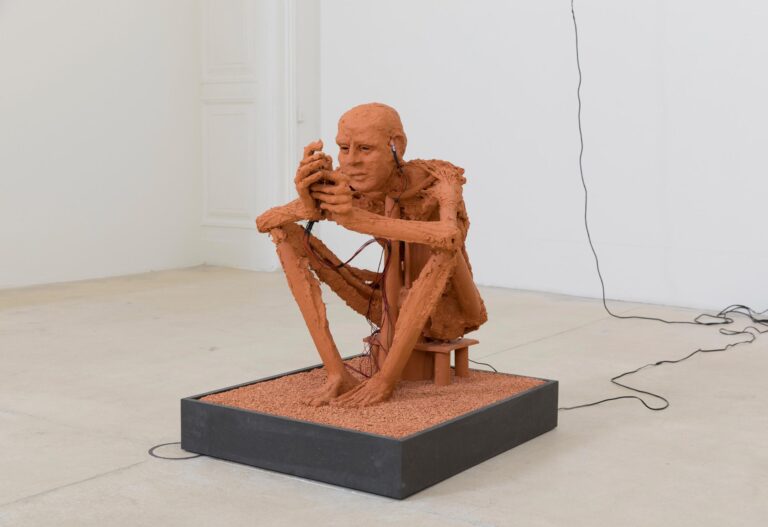
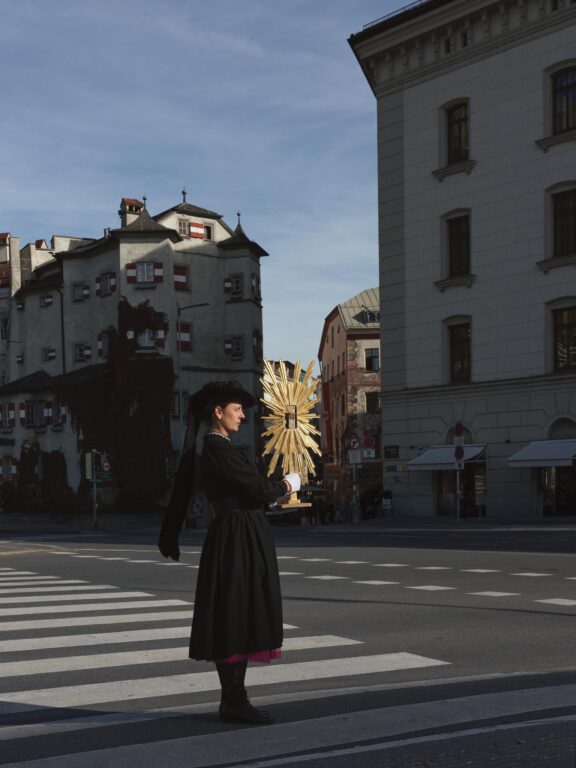
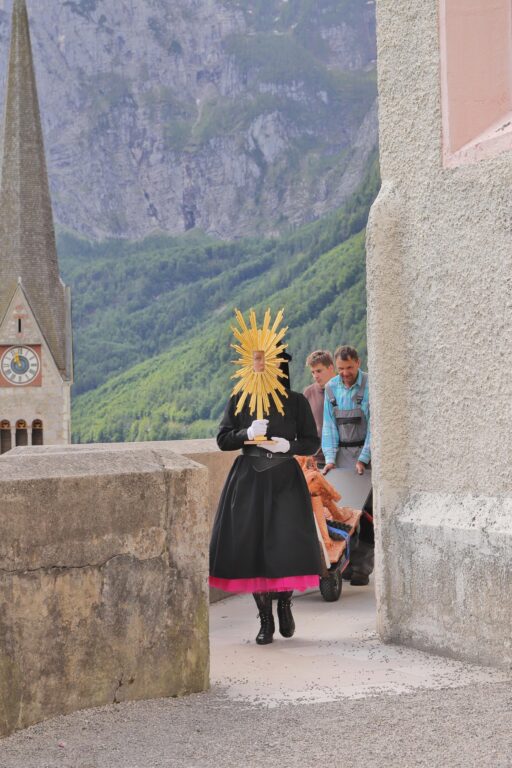
Approaches to ‘…bin im Netz i5.0’, Rosmarie Lukasser’s third solo exhibition at Galerie Krinzinger. Here, “echo” is not understood as an acoustic phenomenon, but rather as a resonant space for the representation of an artificial neural network. A large-scale map of the global energy network illustrates the physical interconnectedness of the world. Rosmarie Lukasser uses the drawing for field research. She observes people in public spaces and adds notes on network structures to these observations. For many years, the artist has been observing the gestures and postures of digitally connected people.
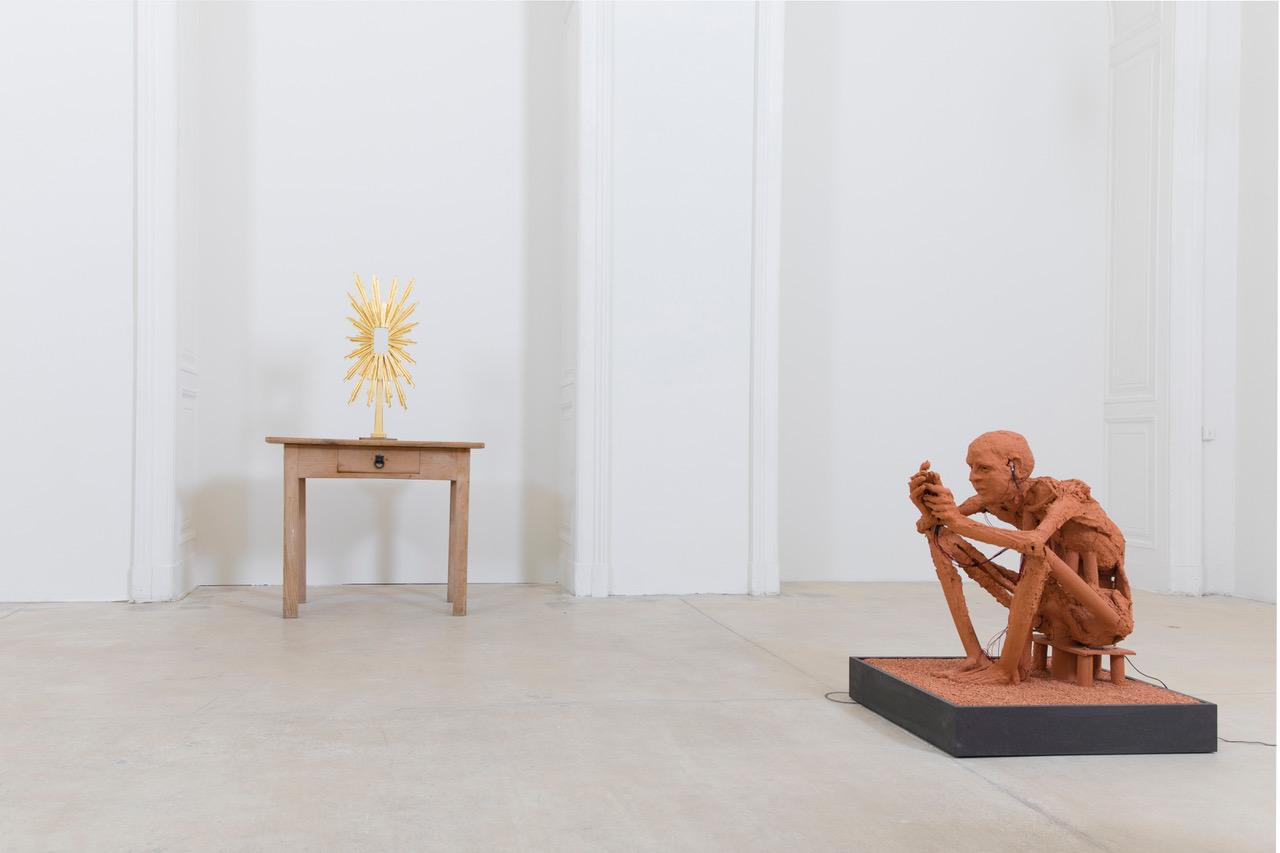
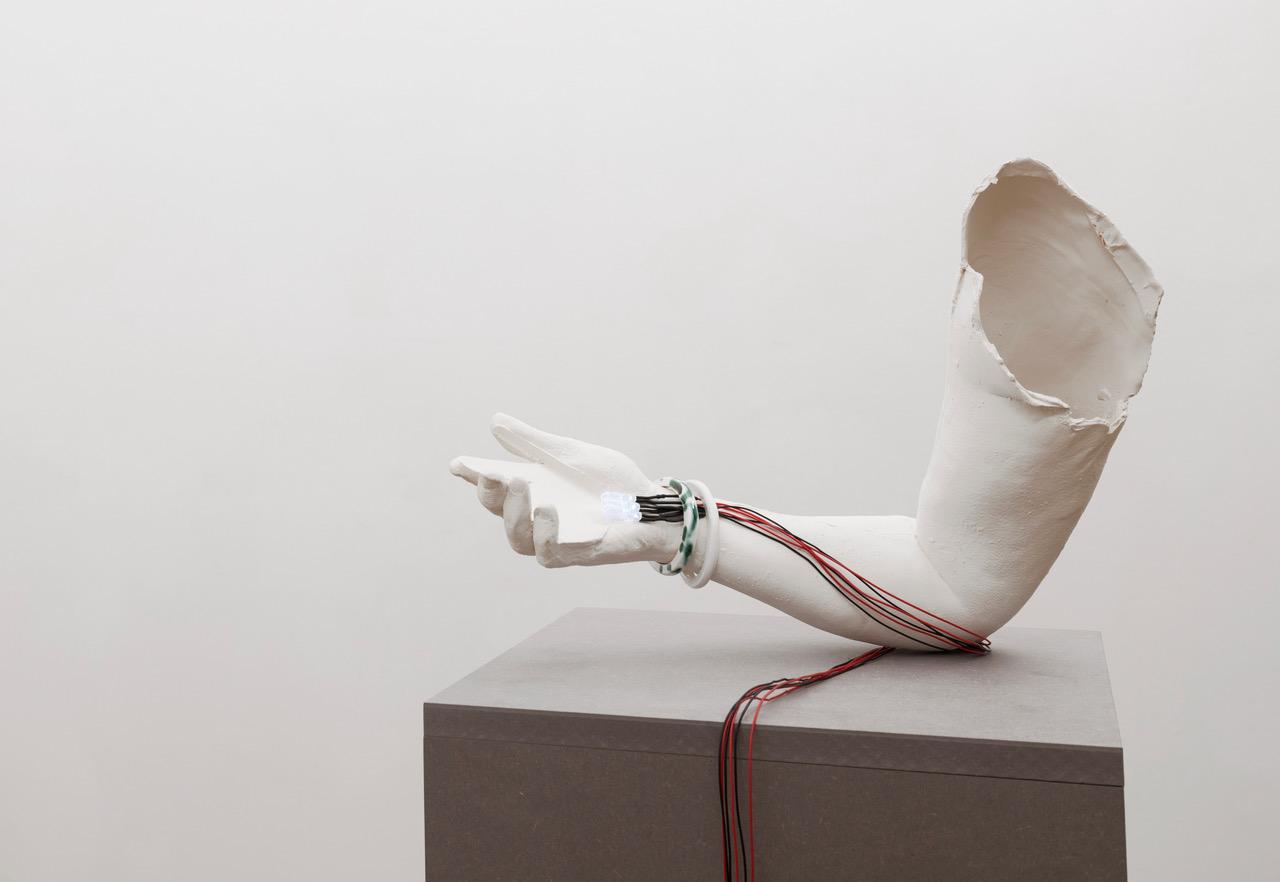
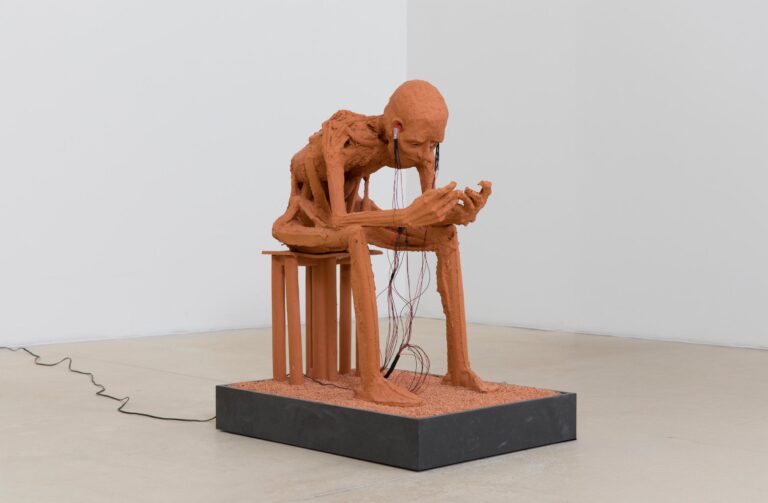
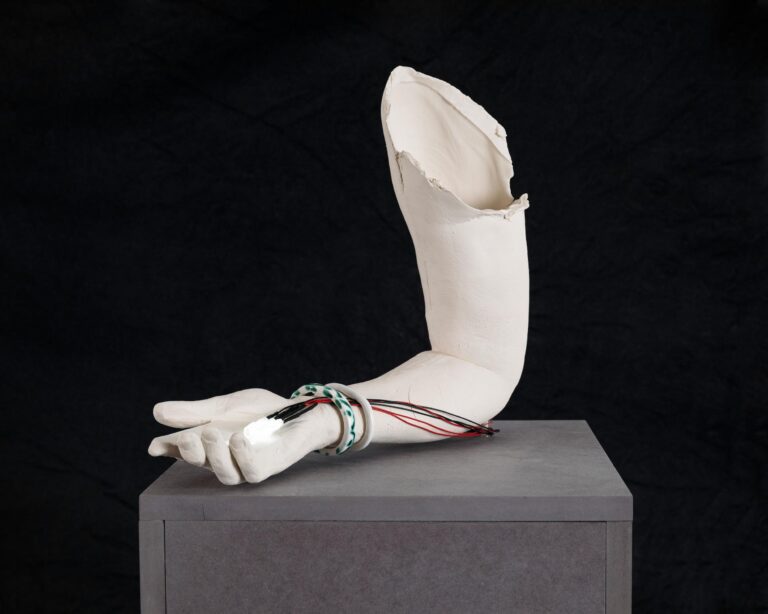
Her sculptures depict states of simultaneous presence and absence: bodies that remain in one place while attention, thoughts and relationships extend into other spaces. The devices themselves remain invisible, their existence has long since become inscribed in the bodies. Hands, eyes, and ears become interfaces, technical extensions become natural companions to a new bodily awareness. Her terracotta sculptures, created in Kikinda, Serbia, one of Europe’s centers for terracotta sculpture, and most recently refined in the Gmundner Keramik studio, lend these questions a special immediacy: shaped from clay, they are both archaic and contemporary at the same time.